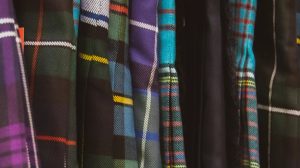

The Scottish kilt is a garment that has become synonymous with Scotland and its rich history. This iconic piece of clothing has a long and fascinating history that dates back centuries. In this blog post, we will take a closer look at the history of the Scottish kilt.
The origins of the kilt are somewhat shrouded in mystery, but it is believed that the garment was first worn by Highlanders in the 16th century. The early versions of the kilt were made from a single length of woolen cloth, which was gathered and belted at the waist. This provided protection from the harsh Scottish weather, as well as freedom of movement for hunting and other activities.
Over time, the kilt evolved and became a symbol of Scottish identity and pride. Tartans, or the distinctive woven patterns associated with different Scottish clans and regions, were developed in the 18th century. Each clan had its own tartan, which was worn by its members to signify their allegiance and identity.
The kilt became a symbol of Scottish nationalism in the 19th century, particularly during the Victorian era. The British government had banned the wearing of kilts after the Jacobite rebellion of 1745, but this ban was lifted in 1782. The Scottish kilt then became a popular choice for formal occasions, such as weddings, and for military dress uniforms.
Today, the Scottish kilt is still a popular garment and is often worn at formal occasions and events such as weddings, Highland games, and other cultural events. While kilts are no longer a common form of everyday wear, they remain a powerful symbol of Scottish identity and heritage.
In conclusion, the Scottish kilt has a long and fascinating history that dates back centuries. From its origins as a practical garment for Highlanders to its current status as a symbol of Scottish identity, the kilt has played an important role in Scottish culture and history. Whether worn for formal occasions or as a way of showing pride in one’s heritage, the Scottish kilt remains an iconic and enduring symbol of Scottish tradition and history.